
Motorola Says iPhone Owners Are Switching to Get Foldable Phones — There is a concrete story behind the headlines, and it is more interesting than the coverage suggests.
As the foldables market grows, Motorola bets on the Razr line to stand out against Apple and other competitors.
What emerged was clear in outline but layered in detail. Reading the announcement alongside the wider context suggests a deliberate move rather than a response to short-term pressure.
For anyone already following this space, the announcement lands on familiar ground. The unfamiliar part is the scale, and the fact that it is being treated as a baseline rather than an exception.
What changed
Looked at closely, the implementation is more conservative than the announcement suggests. That is not a criticism — it reflects a market that has learned from earlier overreach.
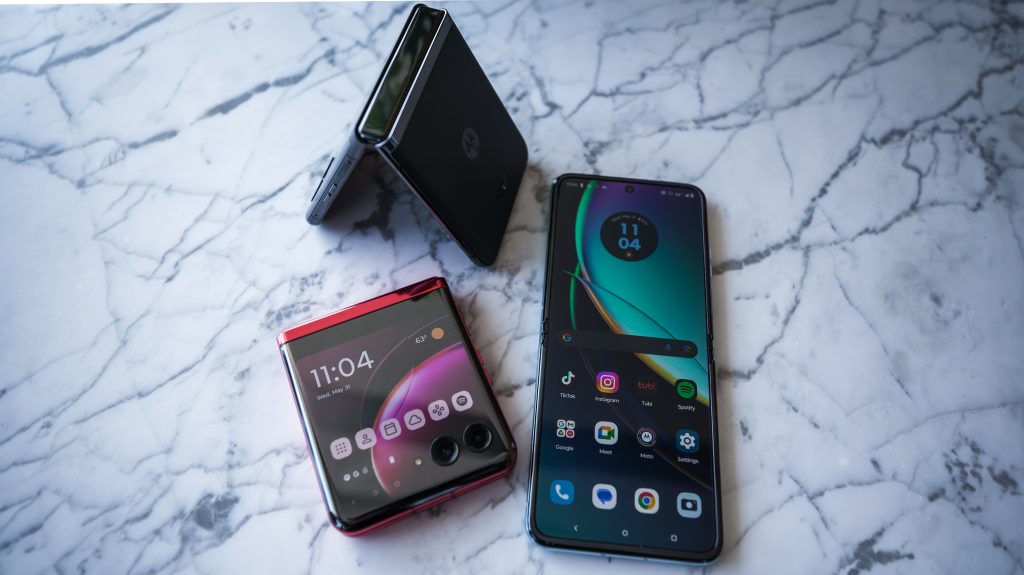
- The Motorola Razr Plus (left) pictured next to the Motorola Razr 2023 (right) From Samsung to Motorola and Google, just about every major Android phone maker has released a foldable phone.
Why it matters
This is the part that should shape a decision. Everything else — pricing, packaging, comparative features — matters less than whether the underlying delivery holds up under the conditions people actually live in.
What to watch
Two things are worth tracking. First, whether the early adopter experience holds as more people sign up. Second, whether the pricing structure survives the first round of competition. Both answers should arrive within the year.
The practical detail
The concrete checklist is this: hardware support, regional availability, contract length, and what happens to the service if the operator changes its approach.
In practice, the details will shift as more reporting lands, but the direction is clear enough to plan around.
This article draws on reporting from CNET. Read the original coverage for the full account.
254,914 views
Article history
- Article published
- Fact-check pass and source link added
- Updated with reader feedback


This matches my own experience after switching providers last year.
Same here, it made the decision much easier.
This matches my own experience after switching providers last year.
That was my conclusion as well after a week of testing.
Been testing a few of these options and the latency difference is noticeable on evening peak.
That was my conclusion as well after a week of testing.
Fair point, though for most European households the difference is minimal.
Has anyone measured this on a 5G connection for comparison?
Agreed on that point, it was exactly my experience too.
I would be curious to see a follow-up after the next firmware update.
Good addition, I had overlooked that entirely.